Historical and Cultural Information
Descriptions and Useful Curiosities for Visitors
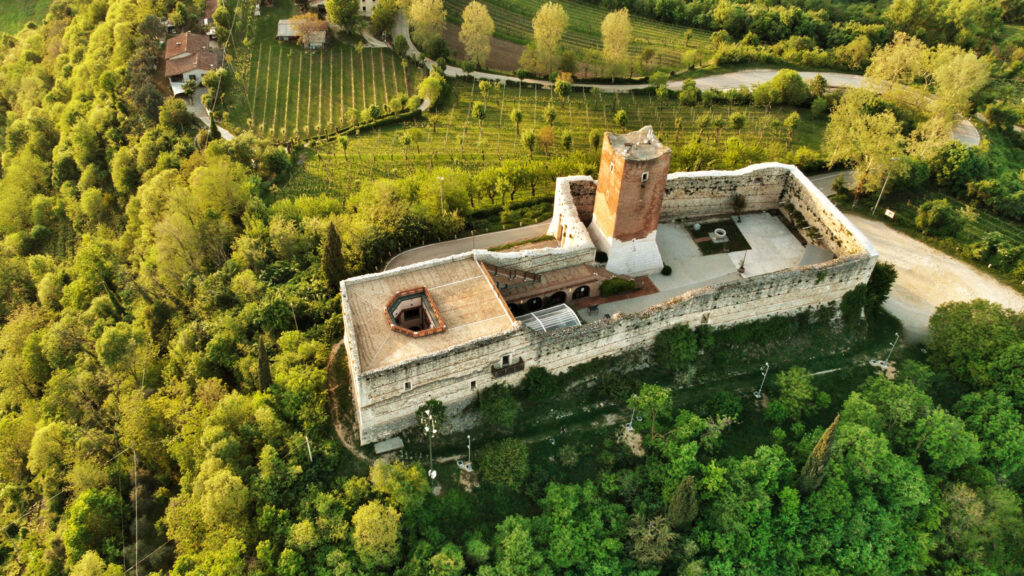
Fortifications from the Roman and early medieval periods probably existed on the hill overlooking today’s town, with the function of strategic control over the local communication routes.
The first certain information about the presence of a castle in Montecchio Maggiore, however, dates back to the early decades of the 1200s, when the fortress was a fief of the Pileo family, antagonists of the Guelph side to Ezzelino III da Romano and Emperor Frederick II of Swabia.
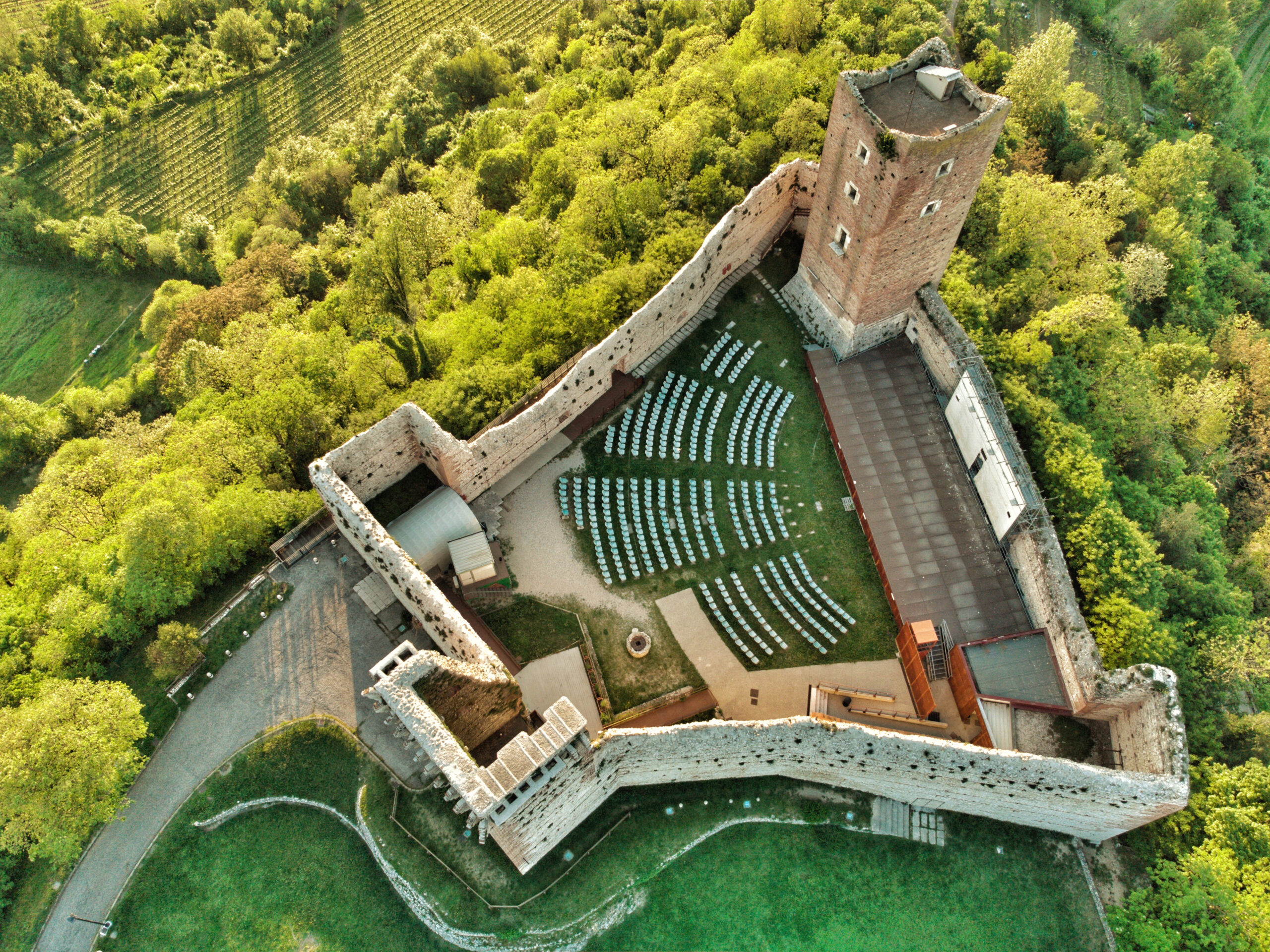
In 1311 Montecchio passed with Vicenza to the Scaligeri family, the work of which are largely the two fortresses visible today, defended at the time by a wall formed by artificial barriers in wood and stones that have now disappeared, as well as by rocks and natural overhangs.
After the end of the Scaliger domination and the brief Visconti interlude, in 1404 the passage to the Republic of Venice took place. In 1514, during the war known as the War of the League of Cambrai, the castles were dismantled and made permanently unusable.
In 1742 the Municipality of Montecchio Maggiore purchased the ownership of the castles from the Serenissima. Restoration work has followed one another to this day, the most important of which was in the thirties of the last century, with the restoration of the walls and the construction of the restaurant with a panoramic terrace in Juliet’s Castle.
The link between the castles of Montecchio and the story of Romeo and Juliet finds roots of historical verisimilitude in the family feuds that tormented communal Italy divided into opposing factions: the Montagues and the Capelletti or Capulets are families that really existed in the thirteenth and fourteenth centuries, the first among the Ghibellines in Verona, the second among the Guelphs in Cremona.
In literature, on the other hand, the story originates from a short story by Luigi Da Porto (1485 – 1529), a leader and writer from Vicenza, the first singer of the love story and feud between the Montagues and Capulets, indirect inspiration of the great William Shakespeare (1564 – 1616) who drew inspiration from it for a work that has become an immortal symbol of tragic love.
To make us meet the story of Romeo and Juliet there is the painter Pino Casarini who, with fourteen fresco paintings preserved in the hall of the restaurant located under the panoramic terrace, tells the story of the two unfortunate Veronese lovers.
Contacts for visits and entrances
via Castelli 4 Martiri, Montecchio Maggiore
ROMEO’S CASTLE
- from May to September: Saturday 15.00-18.30 | Sunday 10.00-12.30 and 15.00-18.30
- Free admission
Contacts
- Culture Office: 0444 705768 | cultura@comune.montecchio-maggiore.vi.it
- Pro Loco: 0444 696546 / 340 0796224 | info@prolocoaltemontecchio.it